



Rope access on a wind turbine: which headlamp for blade inspection?

Inspecting a blade on ropes? Both hands are on the job, so the light goes on the helmet.
Close visual inspection of a turbine blade or tower has six moments where the light matters: check the issued lamp on the ground, fit it with full PPE on, read labels at 0.4 m, inspect at 0.4 to 1 m, take a wider look at 3 m, and write notes beside other workers. Your hands are on the surface or a tool for most of it, and your head aims the beam.
If your employer already issues a light that is approved for your helmet, keep it. If you are choosing one: the Nitecore NWH20 headlamp, a spare battery (WLB40), and a second light with its own battery. Whether its clips may go on your helmet is for your helmet maker and employer to decide. We have not tested this on a turbine.
See the kit ↓The job at a glance
Close visual inspection and recording on a wind turbine blade or tower, by a rope access technician with the light on the helmet. IRATA lists wind turbine blade inspection and repair among rope access applications.
This page does not cover how to reach, isolate, enter, suspend at or leave a turbine, rescue, or work in a hazardous atmosphere. IRATA and GWO training and your employer’s procedures cover that.
- 0.4 mreading labels and close surface detail
- 1 mthe surface you are inspecting
- 4 clipsin the NWH20 box. Your helmet maker decides if they may be used
- 12 hNWH20 on its middle setting, one battery
The 0.4, 1 and 3 m distances are our planning distances, not industry requirements.
- Before mobilisingCheck the lamp your employer issues, its instructions, inspection records and spare power.
- On the ground, full PPE onFit the lamp and press its buttons gloved.
- Reading labelsSerial labels at 0.4 m.
- Close inspectionEdges, recesses and surface changes at 0.4 to 1 m, both hands busy, your head aiming the beam.
- A wider lookA target at 3 m.
- RecordingWrite or read a display beside other workers without lighting their eyes.
Your job, step by step
Your employer’s task plan may order these differently.


How much runtime does your headlamp need?
Our planning allowance for the tasks above is 1h45 of light. One NWH20 battery gives about 12 hours on the middle setting (300 lumens). We do not know your shift, so the chart also shows a working day of 8 hours as our assumption.
Hours of light, against the NWH20 on one battery
hours
Hours on one battery, measured at 26°C: 7 on the high setting (450 lumens), 12 on the middle, 17 on the low (150 lumens) and 51 on the lowest (40 lumens). The light gets dimmer as the battery drains. The 600 lumen turbo setting steps down to prevent overheating, so we do not plan around it. The spare battery is for using the lamp again before you can charge it.
The planning allowance is 15 minutes of label reading, 45 minutes of close inspection, 15 minutes of recording and 30 minutes of contingency. It is a planning figure for the tasks, not a shift.
How close you need to see
 0.4 m: labels and edges
1 m: the surface you are inspecting
3 m: the wider view
0.4 m: labels and edges
1 m: the surface you are inspecting
3 m: the wider view
Illustration, not a measured beam pattern.
What those distances look like
- 0.4 m: about the width of a laptop
- 1 m: about the width of a door
- 3 m: about one storey of an HDB block
Use the flood setting at arm’s length and the spot setting for the look at 3 m. The NWH20’s white light is neutral white (4,500K). We do not state a CRI for it.
On a shiny white surface, glare reflected back at you can hide detail. Try your light on a sample surface before you rely on it. The 62 m range on the middle setting is where the beam fades to moonlight level, which is far more than you need at 3 m.
If the battery runs down, or the lamp fails
Swap in the charged spare battery (WLB40) at the ground station.
A second light with its own battery, issued by your employer or one you own.
Practical checklist
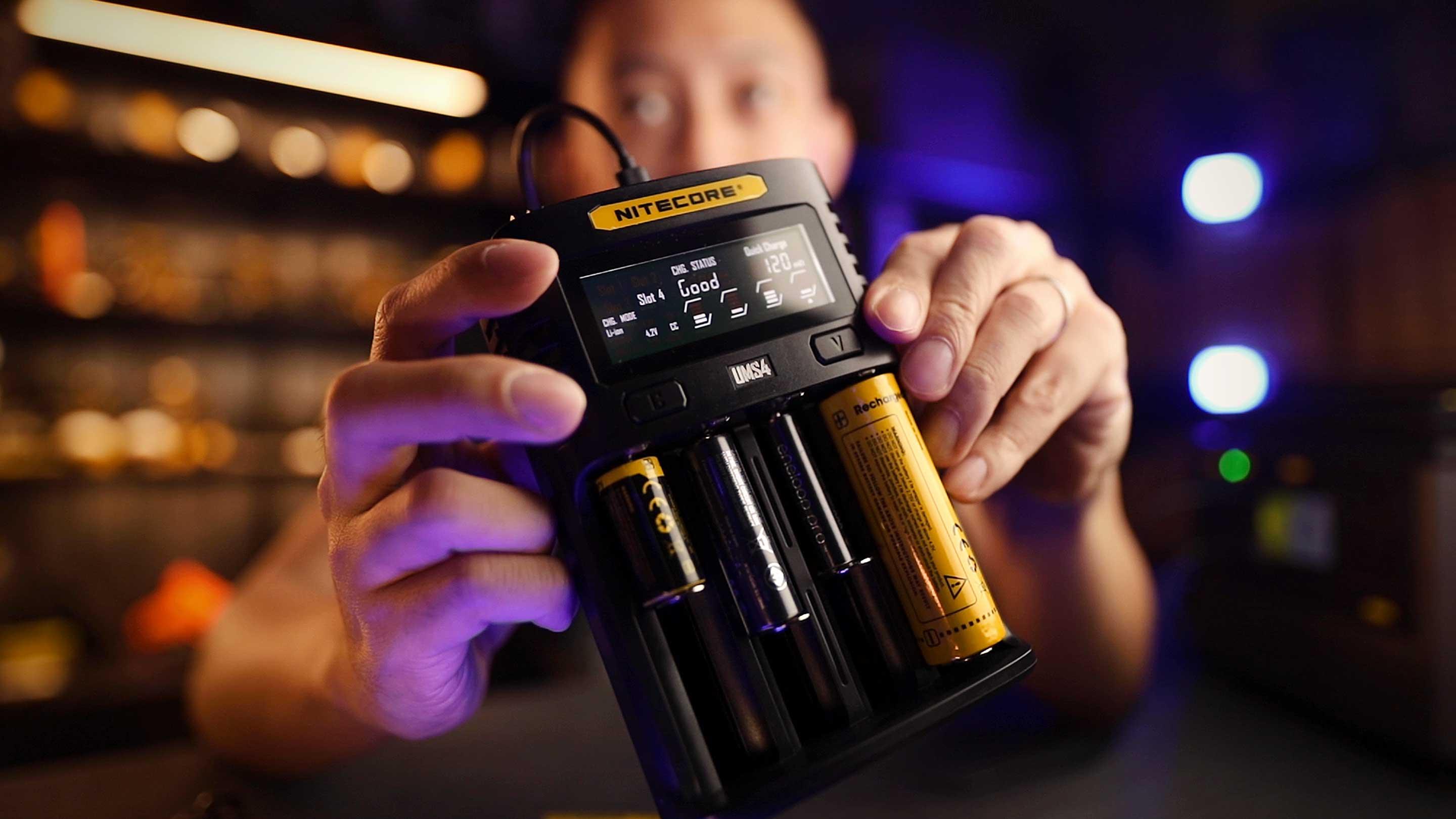
- Charge both batteries at the ground station. A battery takes about 4 hours on a 5V/1A adapter, and three blue LEDs show its level.
- Lock the lamp in your bag: with the lamp off, hold both buttons for 2 seconds. The light flashes 3 times.
- Keep strong magnets away from the lamp’s slide switch.
- Tether or secure the lamp and the spare battery under your employer’s dropped-object rules.
- Record which batteries go out and which come back.
- Practise the swap and the buttons with your gloves on, on the ground.
The kit we’d pack

- The beam adjusts from spot to flood
- The lowest setting (40 lumens) is two presses from off
- About 12 hours on the middle setting on the included battery
- Four hard hat clips in the box. Your helmet maker and employer decide if they may be used.
- 149 g with battery. Handles heavy rain (IP66)

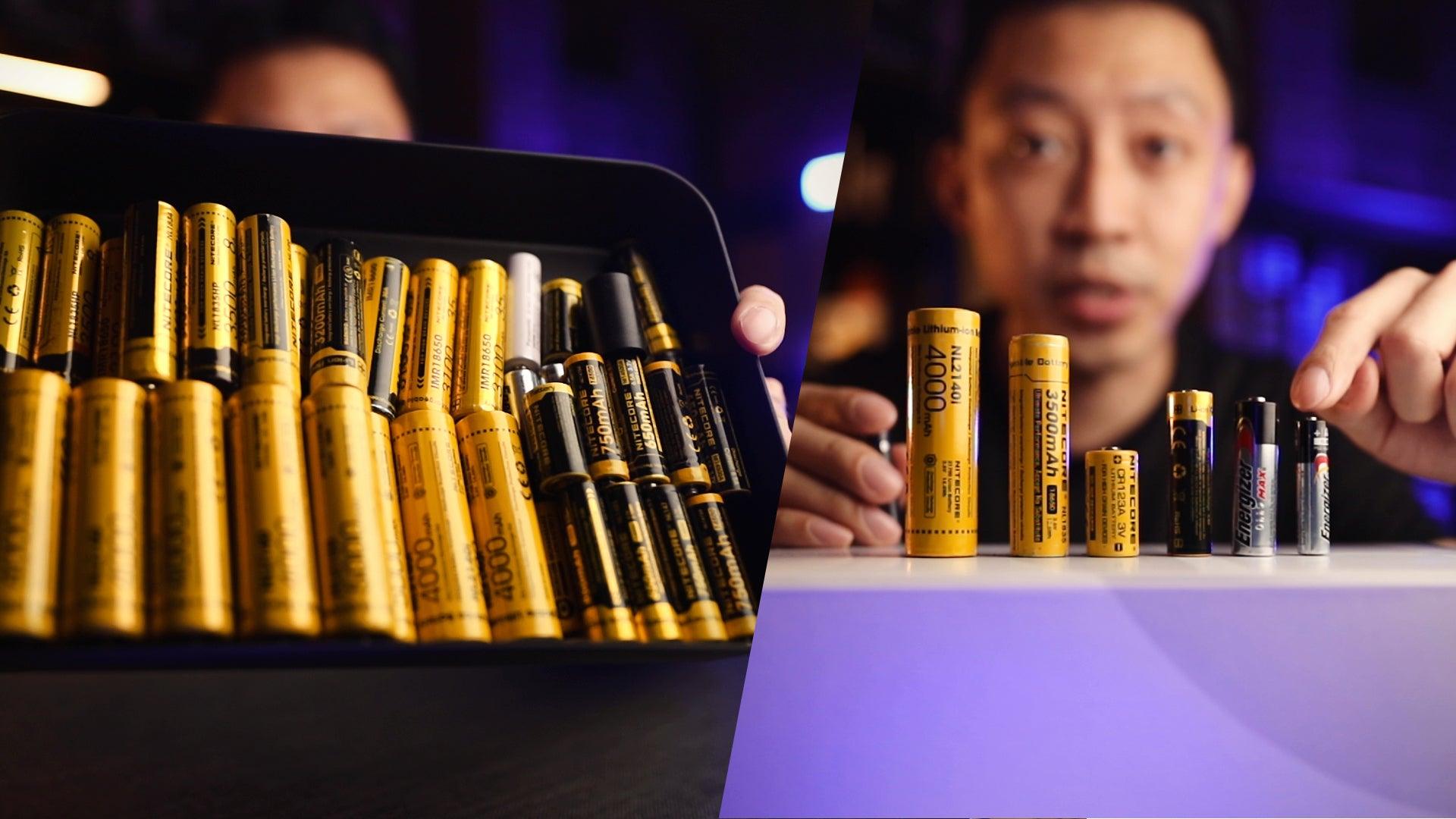
- The same battery as the one in the NWH20 box (4,000 mAh)
- Charges by USB-C on the battery itself, in about 4 hours
- Replaces a depleted battery. It does not fix a failed lamp.
A second light with its own battery, issued by your employer or one you own, completes the kit.
Already own a light? Check it against this list.
- Your employer has accepted it with your helmet.
- You can reach a low setting straight from off.
- It has a wide beam for work at arm’s length.
- You carry a charged spare battery for it.
- You can work its buttons with your gloves on.
- You have a second light with its own battery.
Other lights that also work

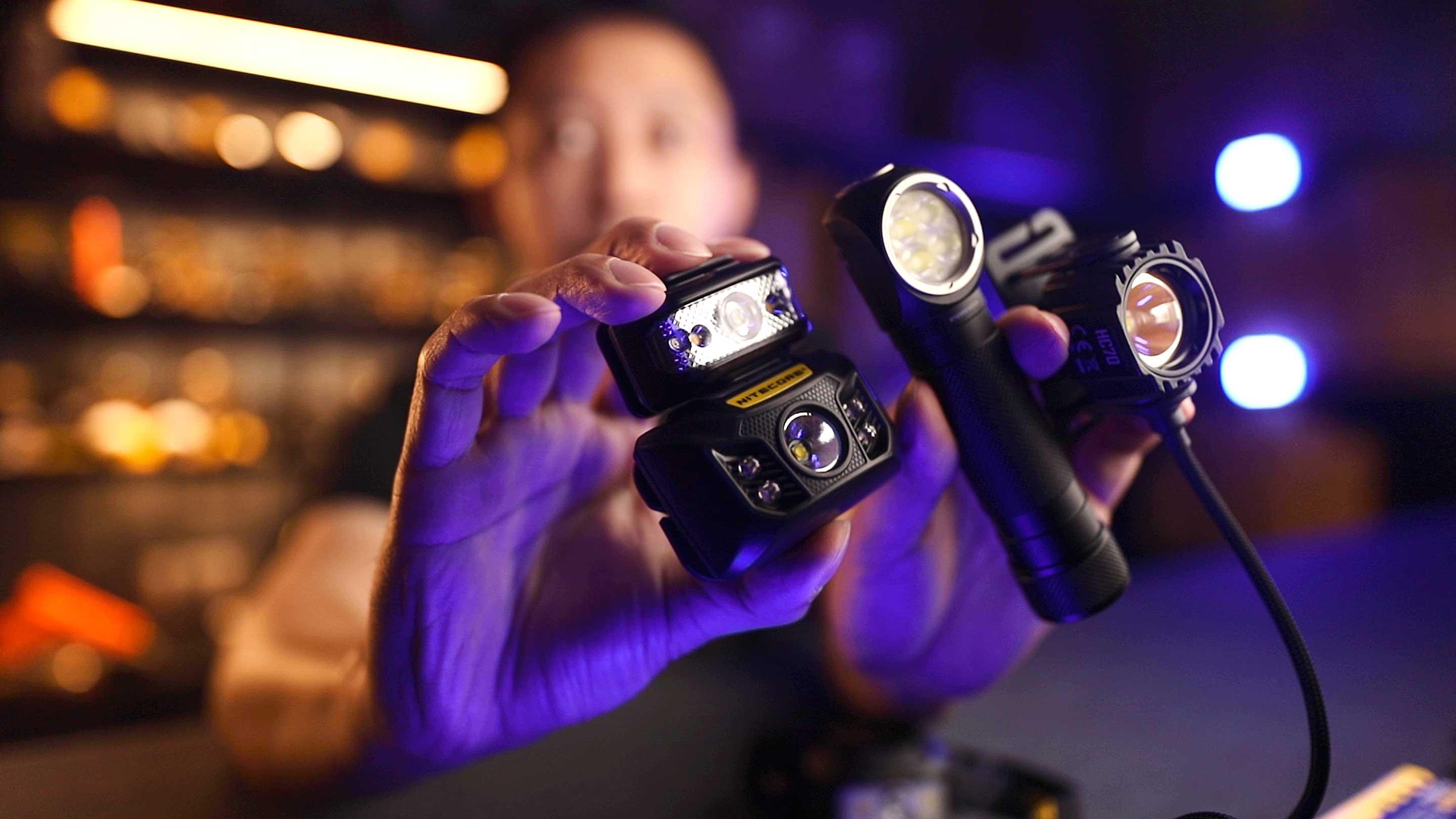
- A separate auxiliary white light with CRI 90 or above. The main beam is fixed, with no spot to flood adjustment.
- The lowest setting (8 lumens) is two presses from off. No hard hat clips in the box.
S$238

- The beam adjusts from spot to flood. About 12 hours on the middle setting (600 lumens) on the included battery.
- 209 g with battery, so it is heavier than the NWH20. No hard hat clips in the box.
S$258
Both can be submerged to 2 m (IP68). Runtimes measured at 26°C on the setting and battery listed.
What the trade bodies say
-
IRATA, renewable energy
Lists wind turbine blade inspection and repair among rope access services.
-
IRATA, tool tethers and lanyards, 17 June 2025
Announces Topic Sheet No. 31, which names tether types, selection criteria and two reported incidents.
-
GWO, Basic Safety Training standard
Version 20, effective 10 March 2026. It describes working at height and basic rescue training for wind turbine environments.
Neither body’s pages that we read mention headlamps, and neither endorses any light.
Questions
Can I clip this to my helmet?
Your helmet maker and your employer decide. The NWH20 box has four hard hat clips. We have no helmet list, compatibility statement or retention rating for them, and we do not say they are certified retention. For its Vertex helmets, Petzl’s technical notice says: “Verify the compatibility of accessories with the helmet.” The same notice lists modifications as prohibited outside Petzl facilities.
Is this light certified for hazardous areas?
No. None of the lights on this page is certified for explosive atmospheres. The NWH20 manual says not to use it to illuminate flammable or explosive materials, because the heat may cause combustion or explosion. Its IP66 and 2 m drop ratings do not make it permitted for work at height, electrical work or hazardous areas.
Will one battery last a shift?
We do not know your shift. One battery gives about 12 hours on the middle setting (300 lumens), measured at 26°C, and the light gets dimmer as the battery drains. Carry the spare battery, charged.
Does it work with gloves?
The NWH20 has two buttons. We have not tested it with your gloves. Press both buttons with your gloves and full PPE on, on the ground, before you rely on it.
My employer issues a headlamp. Do I need this?
Start with the light your employer issues and has approved for your helmet. A replacement has to be accepted by your employer as a complete system: lamp, helmet interface, retention, spare and charging. We do not say a site must buy anything.
Why a second light as well as a spare battery?
A spare battery replaces a depleted battery. It does not fix a failed lamp, LED, switch or mount. A second light with its own battery, issued by your employer or one you own, does.
What about dropped objects?
The headlamp and its spare battery are objects to tether or secure under your employer’s dropped-object rules. IRATA’s Topic Sheet No. 31 news item (17 June 2025) names load rating, tether length and material as selection criteria. It reports a tool that fell 35 m after a tether made from accessory cord failed. Neither incident it reports involved a lamp. A lamp is never fall protection, and this page does not say how to tether.
What does this guide not cover?
Rigging, knots, harness attachment, tool tether installation, climbing, rescue, electrical isolation, turbine shutdown, confined-space entry and hazardous-atmosphere procedures. IRATA and GWO training and your employer’s procedures cover these.
Questions about your own gear? Contact the team.
Sources and credits
- IRATA, renewable energy: wind turbine blade inspection and repair listed among rope access applications. irata.org
- IRATA, Understanding tool tethers and lanyards in rope access, Topic Sheet No. 31, 17 June 2025. irata.org
- GWO, Basic Safety Training standard. globalwindsafety.org
- GWO, standard updates effective 10 March 2026. globalwindsafety.org
- Petzl, Vertex and Vertex Hi-Viz technical notice, code A0040400F (300524), section 9. petzl.com
- Nitecore, NWH20 manual. nitecore.com
- Nitecore, HC65 UHE manual. nitecore.com
- Nitecore, HC75 UHE manual. nitecore.com
- Nitecore Singapore, headlamp and battery price snapshot, 6 October 2026. nitecore.sg