


Batur sunrise trek: which headlamp, and do you need your own?

Doing the Batur sunrise trek? The walk up is in the dark.
In one operator's example you start walking at 03:50 and reach the top about two hours later, up loose sand and gravel with a trekking pole. Then you wait at the top for sunrise.
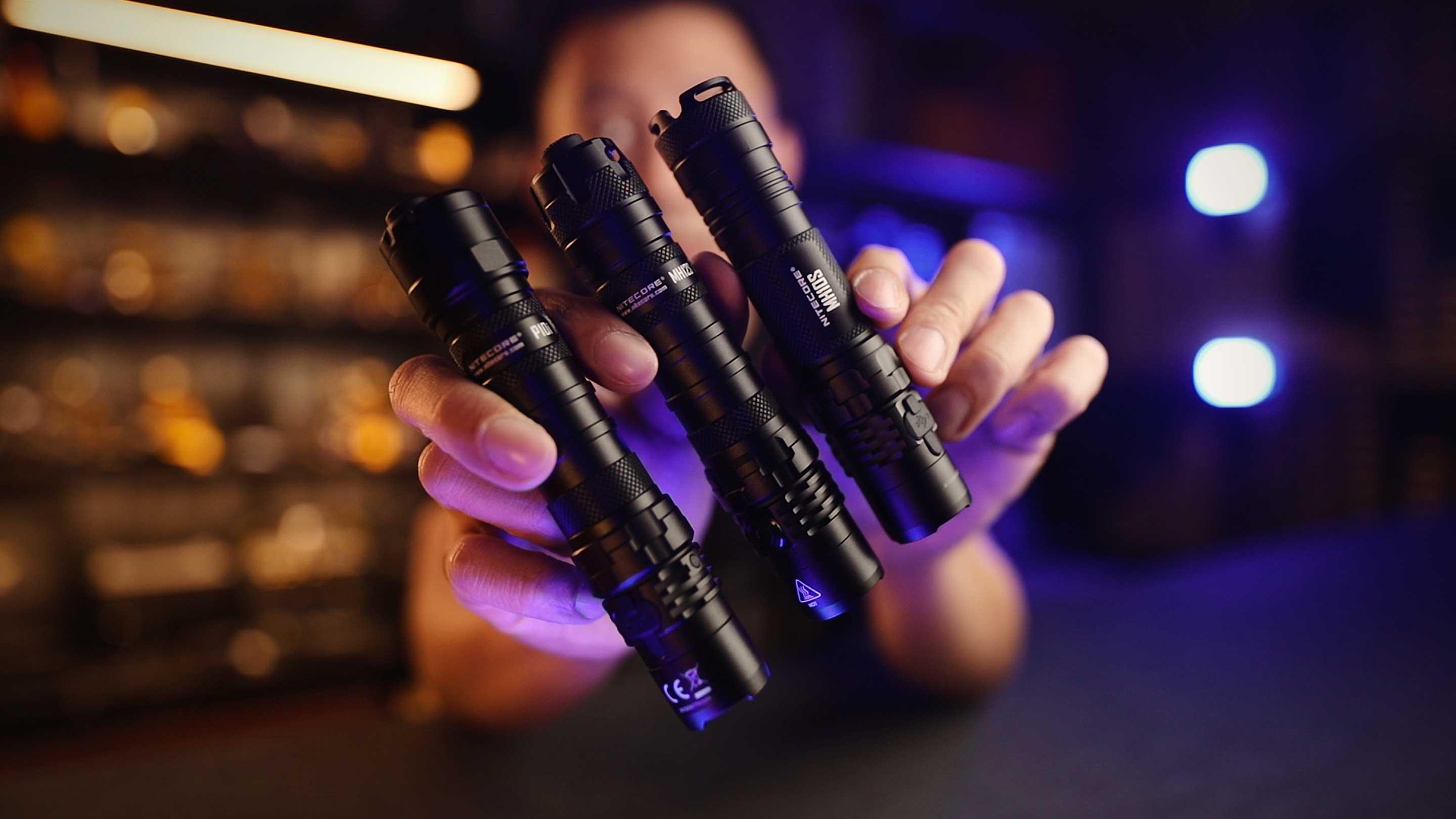
First, ask what light your operator provides. If you want your own: the Nitecore UT27 MCT headlamp on its middle setting, a spare battery (HLB1500) if you want a reserve, and a second light, which can be the one your guide hands you.
See the kit ↓The trek at a glance
Mount Batur Sunrise Trekking’s sunrise trek from Toya Bungkah to the Jero Wage sunrise point, as the operator publishes it. Other operators start elsewhere.
Mount Batur was at alert level I (Normal) on 4 October 2026, according to Indonesia’s volcanology agency. The agency asks visitors not to linger or stay overnight in the active crater and to keep away from gas vents. Confirm your date and route with your operator.
Copernicus Sentinel-2 imagery, 25 Sep 2026. Route from © OpenStreetMap contributors (ODbL), following the operator's published waypoints. For explanation only, not for navigation.
- 3.5 kmto the sunrise point, along the mapped line
- about 620 mof climbing
- One morninghotel pickup about 02:00, car park by 09:00
- 03:50to sunrise, the walk up
- 1Toya Bungkah start
- 2Tampuryang Temple
- 3Jero Wage Warung
- 4Nyangleg
- 5Jero Wage sunrise point
Yellow: the walk up, by headlamp. The walk down is in daylight.
Your night, hour by hour
Timings are from published operator examples. Your guide sets the actual pace on the day.


How much runtime does your headlamp need?
About 4 hours. That covers 2 hours of walking up, 1 hour spare for a slow ascent or poor visibility, and 1 hour of low light at the start and the summit.


One battery gives about 6h30 on the middle setting, measured at 26°C. The light gets dimmer as the battery drains. That still covers the four hours. The spare is for a slow day, or for using the lamp again before you can charge it.
How far ahead you need to see
 0 to 3 m: your feet and the pole tip
5 to 10 m: the next bit of path
15 to 20 m: a quick look for your guide
0 to 3 m: your feet and the pole tip
5 to 10 m: the next bit of path
15 to 20 m: a quick look for your guide
Illustration, not a measured beam pattern.
What those distances look like
- 5 m: about one car length
- 10 m: about a 3 storey block
- 20 m: about a 7 storey HDB block
The 104 m range on the middle setting is where the beam fades to moonlight level. You see rocks clearly for a fraction of that, and on this path the near part of the beam is what matters. Start in neutral white.
If the battery runs down, or the lamp fails
Swap in the charged spare battery (HLB1500).
A second light with its own battery: the light your guide hands you, or a small headlamp you already own. A spare battery cannot fix a lamp that is broken or gone.

Practical checklist
- Charge both battery packs before you fly.
- Use lockout, so the lamp cannot switch on in your bag. With the lamp off, hold both buttons until it flashes 3 times.
- Keep the spare battery somewhere you can reach it.
- Practise the battery swap at home, in the dark.
- Check the headband fits over a beanie.
- With neutral white on, a short press of the W button cycles low, middle and high.
- The UT27 MCT also runs on 3 AAA batteries in an emergency.
The kit we'd pack
- Middle setting: 280 lumens, about 6h30 on the included battery
- Protected against rain and splashing (IP66)
- 74 g with battery, bracket and headband
- Also runs on 3 AAA batteries in an emergency
- Another 6h30 on the middle setting
- Clips straight into the lamp
- Charges over its own USB-C port

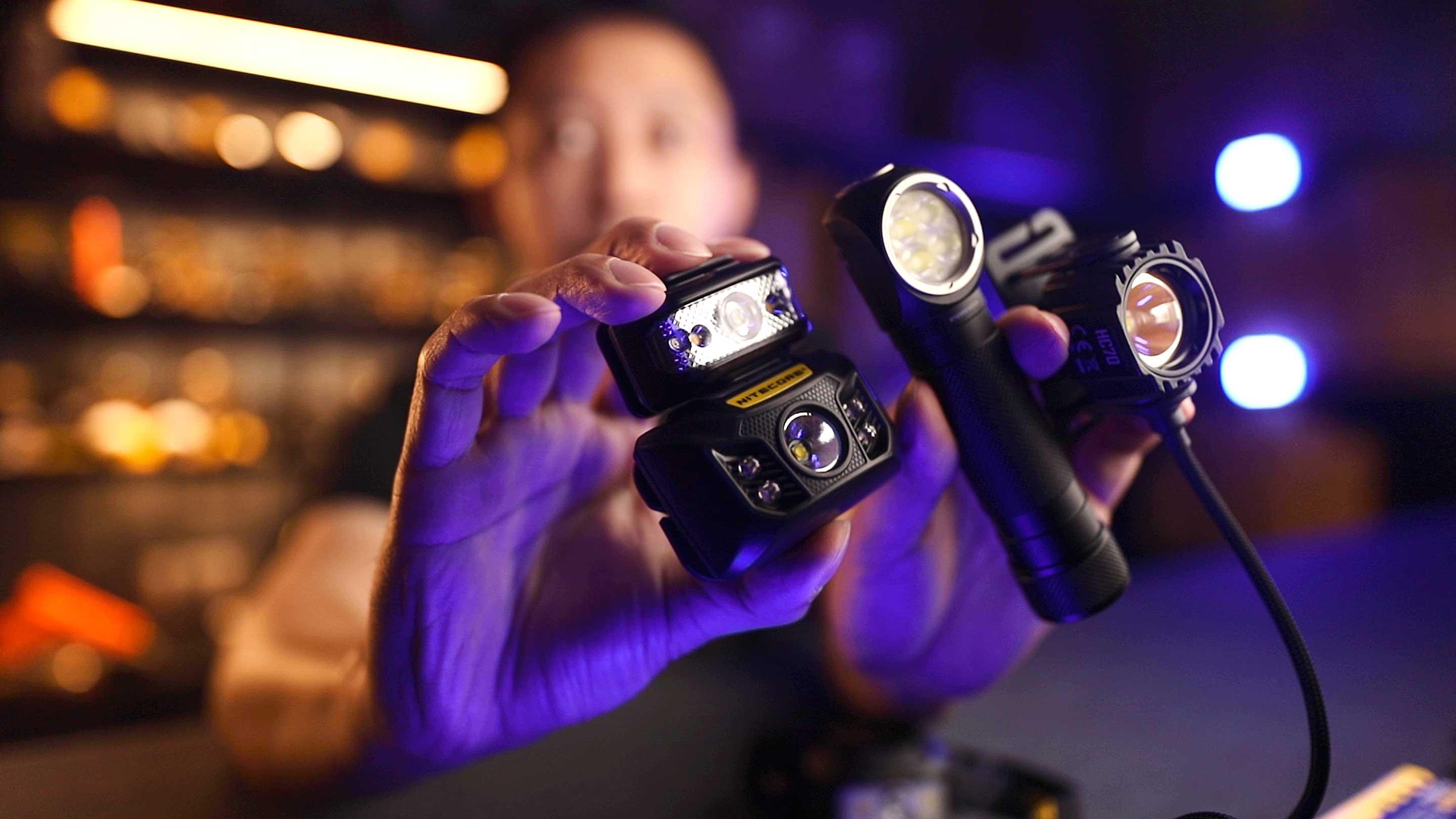
A small headlamp such as the NU25 MCT UL (47 g) also works. From S$79. View product →
Already own a headlamp? Check it against this list.
- Runs about 4 hours on a setting you can walk by, or takes a spare battery.
- Wide beam near your feet.
- Strap stays put over a beanie.
- You can work the buttons in the dark.
- You have a second light.
Other headlamps that also work

- 56 g, sealed built-in battery, no spare to carry.
- 200 lumens for about 6h30 on the middle setting. Protected against rain and splashing (IP66).

- 100 g complete, takes the same spare battery as the UT27 MCT (HLB1500).
- 280 lumens for about 7 hours on the middle setting. Splashproof (IPX6).

- 38 g, sealed built-in battery.
- 200 lumens for about 5 hours on its high setting. Protected against rain and splashing (IP66).
Runtimes measured at 26°C on the setting and battery listed.
What the mountain looks like


Read firsthand accounts
-
Tyler, Earth Trekkers, Mount Batur Sunrise Hike
Set off about 04:00 with a headlamp and hiking pole from the operator and reached the summit at 05:00, on a different northeastern route.
-
Tess, Hiking Mount Batur, Bali
Met the guide at the start at 03:45, was given a headlamp and walking stick, and reached the crater ridge at 05:00.
-
Paul, Empty Nester Miles, Mount Batur Sunrise Hike
Was given a headlamp at the start because the trail was pitch black.
-
Karthik Ramesh, Through Sunrise and Sunset
Was given a torch at the trailhead, climbed soft, slippery black sand and reached the top as a glimmer of light showed on the eastern horizon.
These are personal accounts of the trek, not endorsements of any product. None of these travellers is known to have used Nitecore gear.
Questions
Does the guide give me a light?
Of nine operator pages we checked, four list a flashlight, four list a headlamp and one recommends you bring your own headlamp. The operator used on this page, Mount Batur Sunrise Trekking, lists a flashlight held in the hand. Check what your own operator supplies before you assume you need to buy anything.
Should I still bring my own headlamp?
If your operator supplies a working headlamp, it can be the whole answer. A headlamp of your own, or a second light, gives you a backup if your supplied light fails or gets lost.
Can I use my phone torch?
Your hands are on your trekking pole and, on the steep section, on rock. A headlamp keeps your hands free. A phone torch does not.
How cold is it at the top?
Ohana Bali gives 10 to 15°C at the summit at 05:30, including wind chill, and Bagus Bali gives around 10 to 15°C for the morning. Travellers describe the wait before sunrise as cold, so bring a layer for standing still.
Will the UT27 last the whole trek?
Yes. One battery gives about 6h30 on the middle setting and the trek needs about 4 hours of light. The light gets dimmer as the battery drains, so the spare is there if you walk slowly or want full brightness to the end.
I already own a headlamp
Check it against the list in the kit section.
I am also doing Kinabalu, which headlamp?
See our Kinabalu headlamp guide. That climb is longer and colder, and we recommend the HA29 UHE there.
Questions about your own gear? Contact the team.
Sources and credits
- Mount Batur Sunrise Trekking, selected operator itinerary, flashlights and poles inclusion. mountbatursunrisetrekking.com
- Mount Batur Sunrise Trekking, Toya Bungkah route and ascent duration. mountbatursunrisetrekking.com
- PT Bali Ventur Tour, booking checklist and FAQ. mountbaturtrekkingsunrise.com
- Bagus Bali, private tour inclusions. bagusbalisunrise.com
- Alice Kao, 2016 own headlamp account. alice-kao.squarespace.com
- US Naval Observatory, sunrise and twilight definitions. aa.usno.navy.mil
- BKSDA Bali, 23 Sep 2026 fire report, TWA Gunung Batur Bukit Payang. ksda-bali.go.id
- Tyler, Earth Trekkers, Mount Batur Sunrise Hike. earthtrekkers.com
- Tess, Hiking Mount Batur, Bali. tessomewhere.com
- Paul, Empty Nester Miles, Mount Batur Sunrise Hike. emptynestermiles.com
- Karthik Ramesh, Through Sunrise and Sunset, Indonesian Sojourn. orupilgrimsdiary.wordpress.com
- Mount Batur Sunrise Trekking, product page, 03:50 to 09:00 sequence. mountbatursunrisetrekking.com
- Nitecore, UT27 MCT manual and runtime tables. nitecore.com
- Tim McMahon, independent NU27 runtime test, October 2024. timmcmahon.com.au
- Nitecore Singapore, catalogue and price snapshot, 29 Sep 2026. nitecore.sg
- Nitecore, NU27 manual. nitecore.com
- Nitecore, HA27 UHE manual. nitecore.com
- Nitecore, NU20 Classic manual. nitecore.com
- Wikimedia Commons, Star trails on Mount Batur, Imadedana, CC BY-SA 4.0. commons.wikimedia.org
- Wikimedia Commons, Waiting sunrise at Batur Mountain, I WAYAN LARIANTO, CC BY-SA 4.0. commons.wikimedia.org
- Nitecore, NU25 MCT UL manual. nitecore.com
- Nitecore, UT27 MCT product page. nitecore.sg
- Nitecore, HLB1500 product page. nitecore.sg
- Nitecore, NU27 product page. nitecore.sg
- Nitecore, HA27 UHE product page. nitecore.sg
- Nitecore, NU20 Classic product page. nitecore.sg
- Nitecore, NU25 MCT UL product page. nitecore.sg
- Nitecore Singapore, Kinabalu headlamp guide, for readers doing both trips. nitecore.sg
- Regan, round the world diary entry, 31 Dec 2023. roundtheworldwithregan.weebly.com
- Ohana Bali, Mount Batur trek page. ohana-agency.com
- MAGMA Indonesia (PVMBG), Batur activity report, 4 Oct 2026, alert level I (Normal). magma.esdm.go.id
- Ubud Bali Trekking, Mount Batur sunrise trekking inclusions and itinerary. ubudbalitrekking.com
- Gili Bali Explore, Mount Batur trekking inclusions. gilibaliexplore.com
- Bali Sunrise Trekking and Tour, Mount Batur inclusions. balisunrisetrekkingandtour.com
- Bali Holiday Secrets, Mount Batur hike inclusions. baliholidaysecrets.com
- Sunrise Batur Trekking, what to bring. sunrisebaturtrekking.com
- NOAA Global Monitoring Laboratory, solar calculator equations, used to calculate sunrise at Batur. gml.noaa.gov
- Route data: © OpenStreetMap contributors, openstreetmap.org/copyright, ODbL, following the operator's published waypoints. mountbatursunrisetrekking.com
- Sentinel data licence notice, Copernicus. cds.climate.copernicus.eu
- SRTM 30 m elevation service, used to sample elevation along the mapped ascent line. api.opentopodata.org